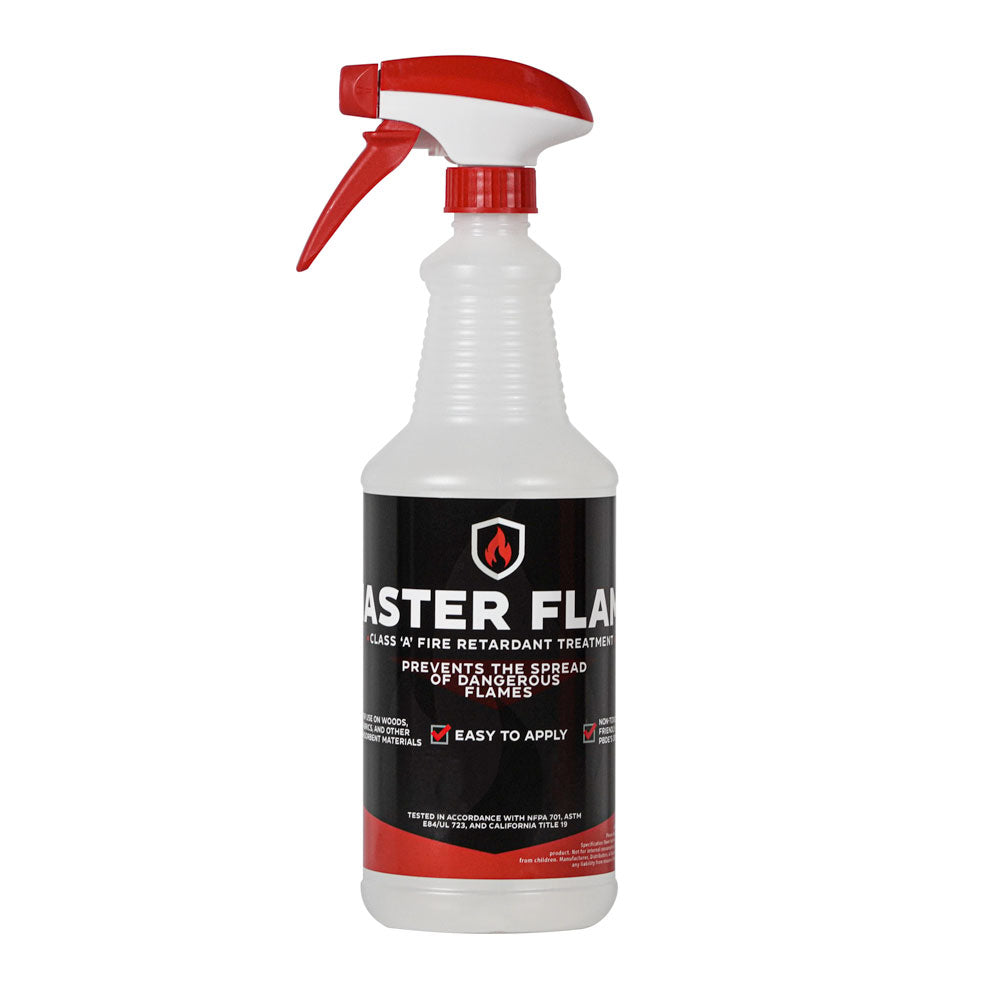
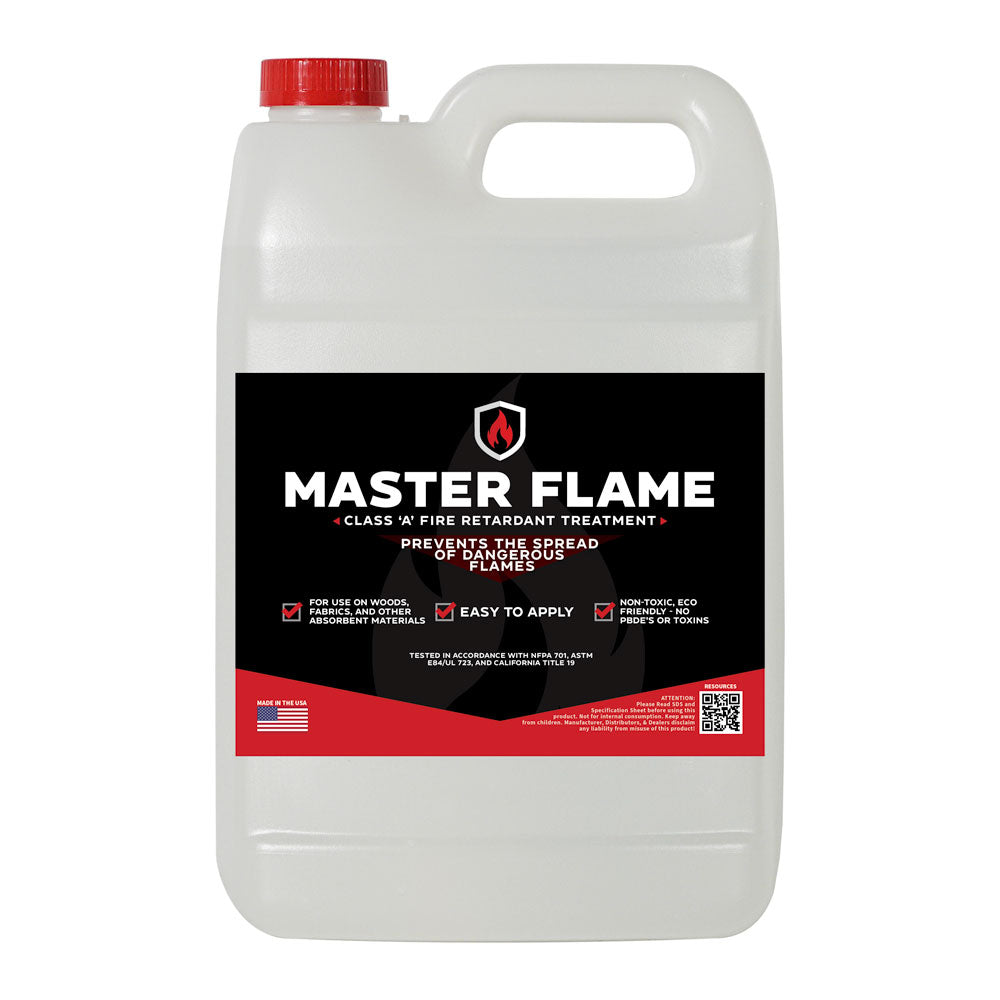
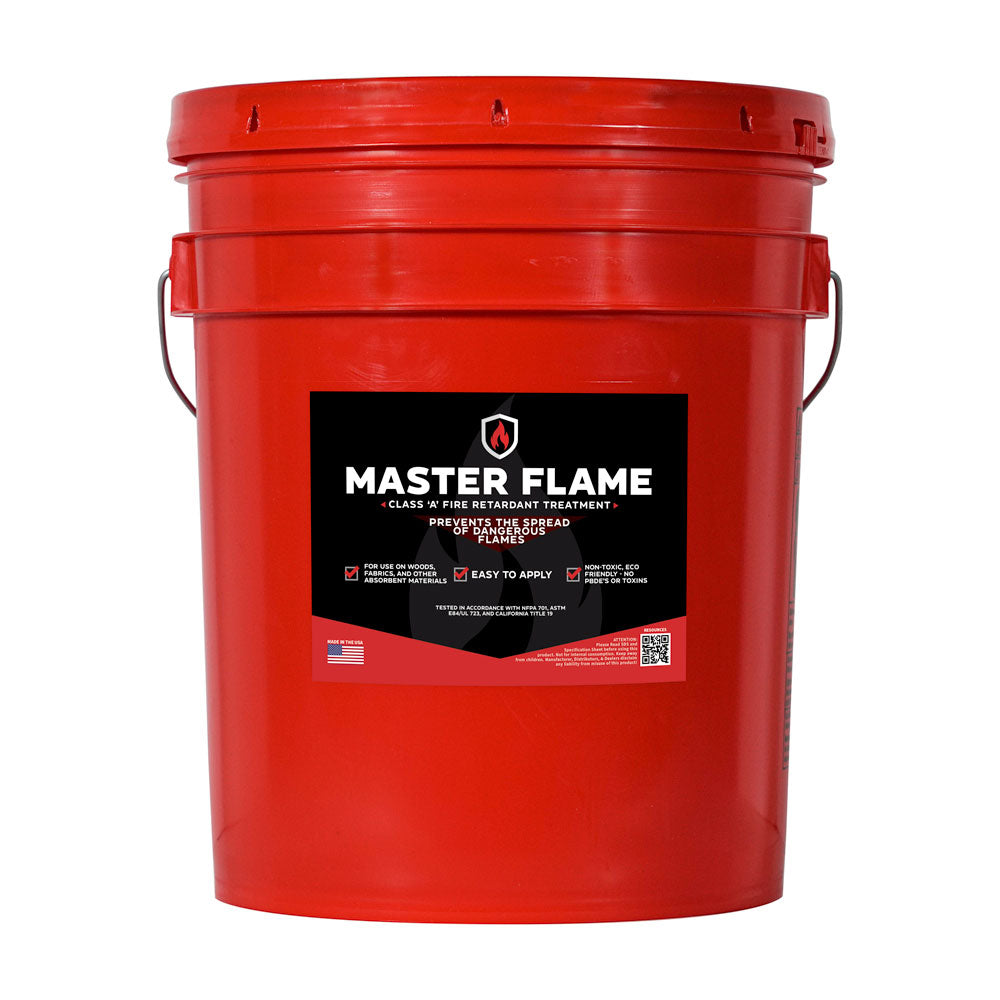
The Science Behind the Safety: How Master Flame Is Tested and What It Proves

When a product claims to protect against fire, that claim needs to be backed by more than marketing language. It needs to be backed by data; real tests, conducted by independent laboratories, under conditions designed to push materials to their limits. Master Flame has been submitted to three of the most rigorous and widely recognized fire safety standards in the country, and it has passed all of them. Here's exactly what each test is, how it's performed, and what Master Flame's results actually mean.
NFPA 701 — Flame Propagation of Textiles and Films
NFPA 701 is the national standard for evaluating how textiles and fabric-based materials behave when exposed to flame. It's the benchmark used by fire marshals, venue managers, theatrical production companies, and building code authorities to determine whether a treated fabric is genuinely flame resistant or just treated to appear that way. If you work in live events, theatre, film production, or any environment where textiles and decorative materials are present, NFPA 701 compliance is often not optional - it's required.
The test itself is straightforward but unforgiving. Ten individual fabric specimens are preconditioned and then each one is exposed to a controlled flame. Three things are measured and recorded for every specimen:
- "afterflame", meaning how long the material continues to burn after the flame source is removed.
- flaming drip or debris, meaning whether burning particles fall away from the specimen and could ignite surrounding materials; and weight loss, meaning how much of the material was actually consumed by the fire.
- To pass, afterflame must extinguish within 2 seconds across all specimens, there can be no flaming drip or debris, and the mean weight loss cannot exceed 40%.
Master Flame was tested by SGS North America on a single coat applied to a 7-ounce absorbent fabric. Across all 10 specimens, afterflame was 0 seconds. Every specimen self-extinguished the moment the flame source was removed. Flaming drip and debris was 0 across the board. Mean weight loss came in at 24.9%, well below the 40% failure threshold, and flames never projected beyond the top of any specimen at any point during the test. Every specimen passed every criterion. The result was a clean, unqualified pass.
ASTM E84 — Surface Burning Characteristics of Building Materials
ASTM E84 is the definitive standard for evaluating how building materials, including treated wood and lumber, behave in a fire. It is referenced by the International Building Code, NFPA 101 Life Safety Code, and NFPA 5000, making it one of the most widely cited fire performance standards in construction and architecture. If you're building, renovating, or specifying materials for any structure that needs to meet code, ASTM E84 classification is what inspectors, architects, and fire authorities are looking for.
The test is known as the "tunnel test" for good reason. A 24-foot specimen is mounted horizontally in a ceiling configuration inside a sealed 25-foot tunnel chamber, facing downward toward two upward-oriented burners. The specimen is subjected to a sustained flame insult of approximately 88 kilowatts for ten full minutes. Throughout the test, two values are continuously measured: how far and how fast the flame travels along the surface of the material, reported as the Flame Spread Index, and how much smoke the material produces, reported as the Smoke Developed Index. Results are assigned one of three classifications — Class A is the highest, followed by Class B and Class C. To achieve Class A, a material must score 25 or below on the Flame Spread Index and 450 or below on the Smoke Developed Index.
Master Flame, tested by SGS North America on standard construction grade lumber with a single coat applied, earned a Class A rating, the highest possible classification. The Flame Spread Index came in at 15, well within Class A range. Smoke Developed came in at just 55, a fraction of the 450 maximum. Flame spread was contained to only 5 feet of the 24-foot specimen, ignition didn't occur until 1 minute and 27 seconds into the test, and there were zero unusual observations throughout. No drips, no delamination, no sagging, nothing. One coat on unfinished lumber produced a result that satisfied the most demanding tier of fire performance classification recognized by the building code.
California Title 19 — State Fire Marshal Certification
California Title 19 refers to Section 13115 of the California Health and Safety Code, which establishes the minimum requirements for flame resistance of materials sold and used within the state of California. Compliance with Title 19 is enforced by the California State Fire Marshal, and any flame retardant chemical sold for use in California must be registered and approved before it can be legally marketed or applied. This isn't a voluntary certification; it's a legal requirement, and it carries real weight.
To be listed on the California Approved List of Flame Retardant Chemicals and Fabrics, a product must demonstrate that it meets the State Fire Marshal's minimum flame resistance requirements through verified testing. The approval process involves independent review by the Fire Engineering and Investigations Division of the Office of the State Fire Marshal.
Master Flame holds an active California State Fire Marshal Chemical Registration under License Number C-027489, issued by the Office of the State Fire Marshal and valid through June 2027. This means Master Flame has been reviewed, approved, and formally registered as a compliant flame retardant chemical for use in the state of California; one of the most stringent regulatory environments for fire safety in the country.
What This Means for You
Three independent certifications. Three clean results. Whether you're a homeowner, a contractor, a production professional, or a purchasing manager responsible for specifying fire safety products, you now have the documentation to back up every claim made about Master Flame. It isn't just effective; it's proven, certified, and compliant with the standards that matter most.