Celebrate Safely This Season: A Master Flame Guide to Holiday Fire Protection

Holidays bring people together, and with them come the decorations that make every celebration feel special. Wreaths on the door, garland strung across the mantel, hay bales on the front porch, fabric banners hanging from the ceiling, and candles flickering on the table. These are the details that make a holiday feel like a holiday. They're also, in many cases, some of the most flammable materials you'll bring into your home or event space all year.
The good news is that protecting them doesn't require much. A single treatment of Master Flame applied before the decorations go up can make a meaningful difference in how those materials behave if they ever come into contact with a flame. Here's a look at the risks by season and how Master Flame can help.

Spring and Easter
Spring decorations tend to lean heavily on natural materials. Burlap table runners, cotton bunting, fabric ribbon, woven baskets, and dried floral arrangements are all common in Easter and spring displays, and all of them are highly absorbent and highly flammable. These items often share space with candles on dining tables and mantels during spring gatherings, putting them in closer proximity to open flame than most people stop to consider. Treating these materials with Master Flame before they go on display is a simple precaution that costs very little time and adds a significant layer of safety to your celebration.

Summer and Fourth of July
The Fourth of July is one of the highest fire risk holidays of the year, and not just because of fireworks. Outdoor celebrations bring fabric tablecloths, burlap decorations, cotton bunting, patriotic banners, and canvas canopies into environments where open flame, grills, sparklers, and fireworks are all present at the same time. The combination of dry summer conditions, natural fiber decorations, and active ignition sources in the same space creates a risk that's easy to overlook in the excitement of the holiday. Treating your fabric decorations and canvas materials with Master Flame before the celebration starts adds a protective barrier that resists ignition and slows the spread of flame, giving you more time to respond if something does go wrong.

Fall and Halloween
Fall is arguably the highest-risk season for decorative fire hazards. Hay bales, dried corn stalks, burlap, cotton cobwebs, fabric bunting, and natural dried arrangements are all staples of Halloween and autumn displays, and all of them are extremely flammable by nature. These materials are often placed outdoors on porches and entryways, near jack-o-lanterns with real candles, string lights, and fire pits. Indoors, they often sit near fireplaces and candles as part of harvest and Halloween displays. Hay, in particular, is one of the most combustible natural materials commonly used in seasonal decoration, and it ignites and spreads flame rapidly. Master Flame absorbs into hay, burlap, dried natural materials, and cotton-based fabrics, creating a protective barrier that makes these materials significantly harder to ignite. It won't change their appearance, and it won't take away the charm of a well-decorated front porch. It will, however, give you a meaningful safety margin if a candle tips or a spark lands in the wrong place.

Winter and Christmas
The winter holiday season brings its own unique set of fire risks. Fresh and artificial garland, cotton and burlap tree skirts, fabric ornaments, decorative ribbon, canvas stockings, and natural wreaths are often placed near candles, fireplaces, and string lights throughout the season. Christmas trees, whether real or artificial, are a well-documented fire hazard, and the natural fiber decorations that surround them only compound that risk. Treating fabric elements of your holiday display with Master Flame before they go up is one of the simplest steps you can take to reduce the risk of a holiday fire. For natural wreaths, garland, and dried arrangements, Master Flame absorbs into the material, creating a protective barrier that resists ignition. For fabric items like tree skirts, stockings, and ribbon, the same principle applies as long as the material is a natural, absorbent fiber.
What Master Flame Can and Can't Protect
It's worth being clear about what Master Flame works on in a holiday decoration context. Any natural, absorbent material is a candidate for treatment. That includes cotton, burlap, linen, canvas, wool, hay, dried natural arrangements, and natural fiber garland and ribbon. Synthetic materials like polyester, nylon, and acrylic will not absorb the formula and will not receive protection. If you're unsure whether a decoration is made from a compatible material, a quick test is to see whether the material absorbs water readily. If it does, Master Flame can protect it.
How Easy Is It to Apply?
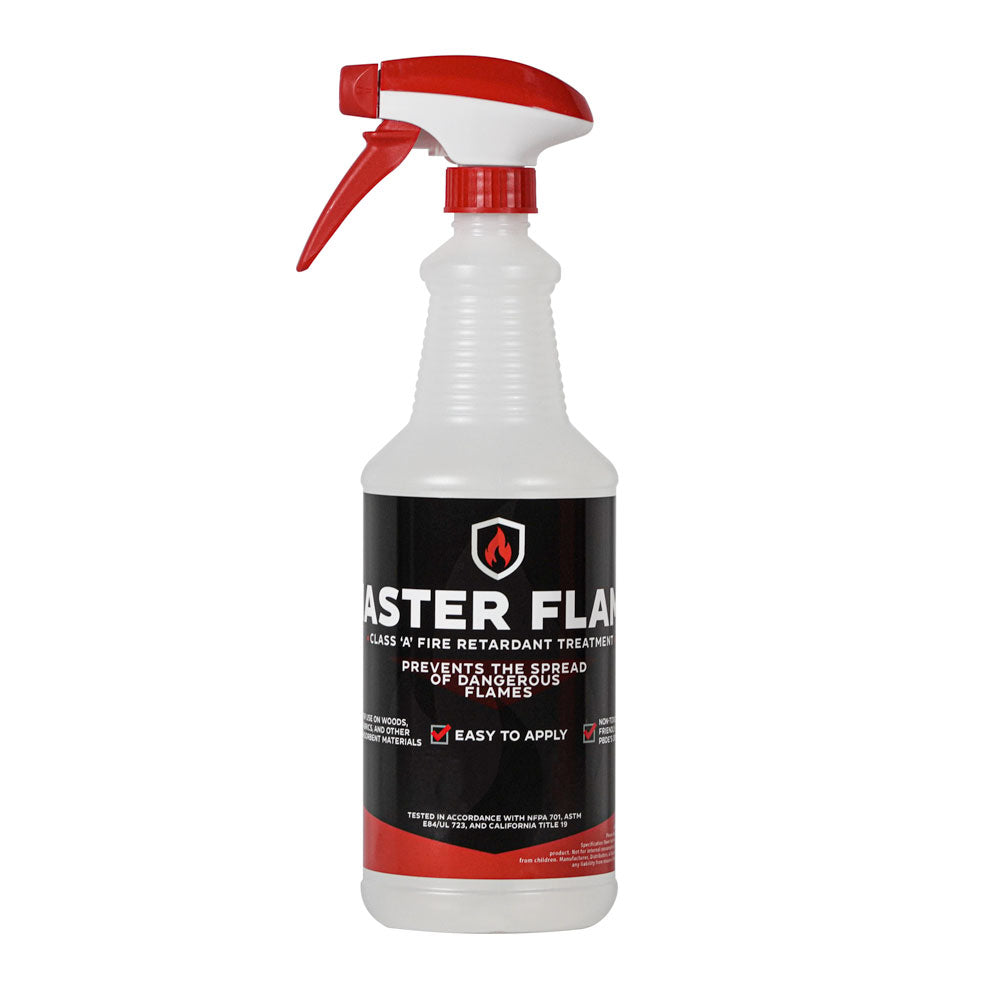
Applying Master Flame to holiday decorations requires nothing more than a spray bottle and a few minutes before everything goes up. Spray the material evenly, make sure all sides are covered for thicker items, and allow it to dry for 24 to 48 hours before putting the decoration in place. For smaller items like fabric ornaments, burlap ribbon, or cotton bunting, you can soak them directly in Master Flame for thorough, even coverage. That's all there is to it. There's no special equipment, no professional installation, and no complicated process. It's one afternoon of preparation that covers an entire season of celebration.
The Bottom Line
Holidays are meant to be enjoyed, and the decorations that make them feel special shouldn't come with an asterisk. Taking a few minutes to treat your natural fiber decorations with Master Flame before each season is a small investment that pays off in genuine peace of mind. Whether it's a hay bale on the porch in October, a burlap banner at your Fourth of July cookout, or a cotton tree skirt under the Christmas tree in December, Master Flame gives those materials a meaningful line of defense against the fire risks that come with the season.