Master Flame for Your Home: Simple Fire Protection You Can Apply Yourself

Most homeowners think about fire safety in terms of smoke detectors and fire extinguishers. Those things matter, but they're reactive. They respond to a fire that's already started. Master Flame is different. It's the layer of protection that works before the alarm ever goes off, treating the materials in your home so that if a fire does start, it has a much harder time spreading. And the best part is that applying it yourself is as simple as using a spray bottle.
Here's a look at the places in your home where Master Flame can make a real difference, including a few you might not have considered.

Curtains and Drapes
Curtains are one of the most overlooked fire hazards in any home. They're large, they're often made of natural fibers, and they hang near windows, candles, lamps, and heat sources. In a fire event, curtains can catch quickly and carry flames across a room in seconds. A single treatment of Master Flame on cotton, linen, or other natural-fiber curtains creates a protective barrier that resists ignition and dramatically slows the spread of flame, giving you critical time to respond before the situation escalates.

Upholstery and Soft Furnishings
Sofas, armchairs, ottomans, and cushions made from natural-fiber fabrics are all candidates for treatment. These are large pieces of material that sit in the middle of your living spaces, often near candles, fireplaces, or other heat sources. Treating upholstery with Master Flame is straightforward; spray it evenly, let it dry, and the protection is built in. It won't change the look, feel, or color of the fabric. It simply makes it harder to ignite.

Areas Around the Stove and Kitchen
The kitchen is statistically one of the most common places for home fires to start. Dish towels, pot holders, curtains near the stove, and decorative textiles in the cooking area are all materials that can catch fire quickly if a flame gets out of control. Treating these items with Master Flame adds a meaningful layer of protection in the room where it matters most. It won't make your kitchen fireproof, but it gives those materials a fighting chance when they're closest to the heat.

Fireplaces and Wood-Burning Areas
The area around a fireplace is another zone worth paying close attention to. Rugs, hearth cushions, decorative fabric elements, and nearby upholstered furniture are all at risk from errant sparks or embers. For any natural-fiber textile in that zone, Master Flame is a simple and effective precaution. And if you have exposed wood framing, mantels, or decorative wood elements nearby that are unfinished, those can be treated as well, absorbing Master Flame directly into the grain and forming a barrier that resists ignition.

Patio, Pergola, and Outdoor Living Spaces
Outdoor living spaces often get overlooked entirely when it comes to fire safety, but they carry their own risks. Outdoor curtains, canvas shade sails, fabric furniture covers, wooden pergola structures, and decorative elements can all be treated with Master Flame. For any outdoor wood application, it's important to follow up with a water-based sealant to lock the treatment in and protect it from the elements; but the protection itself is just as real as any indoor application.

Holiday and Seasonal Decorations
This one catches a lot of homeowners off guard. Seasonal decorations. Wreaths, garland, burlap ribbon, fabric ornaments, decorative hay bales, and natural dried arrangements are often highly flammable and placed in close proximity to candles, string lights, and fireplaces during the exact time of year when those things are in heaviest use. A quick treatment with Master Flame before the decorations go up is a simple step that most people never think to take, and it can make a significant difference if something goes wrong.

Wood Throughout the Home
Anywhere unfinished wood is present in your home, such as exposed beams, framing in an unfinished basement, a workshop, a shed, or any structural element that hasn't been painted or sealed, Master Flame can be applied to dramatically reduce the risk of that wood contributing to the spread of a fire. The formula absorbs directly into the grain and binds within the wood, creating a protective barrier that resists ignition and slows the spread of flames. It's not just for new construction, it's for any bare wood surface that could benefit from an added layer of protection.
How Easy Is It?
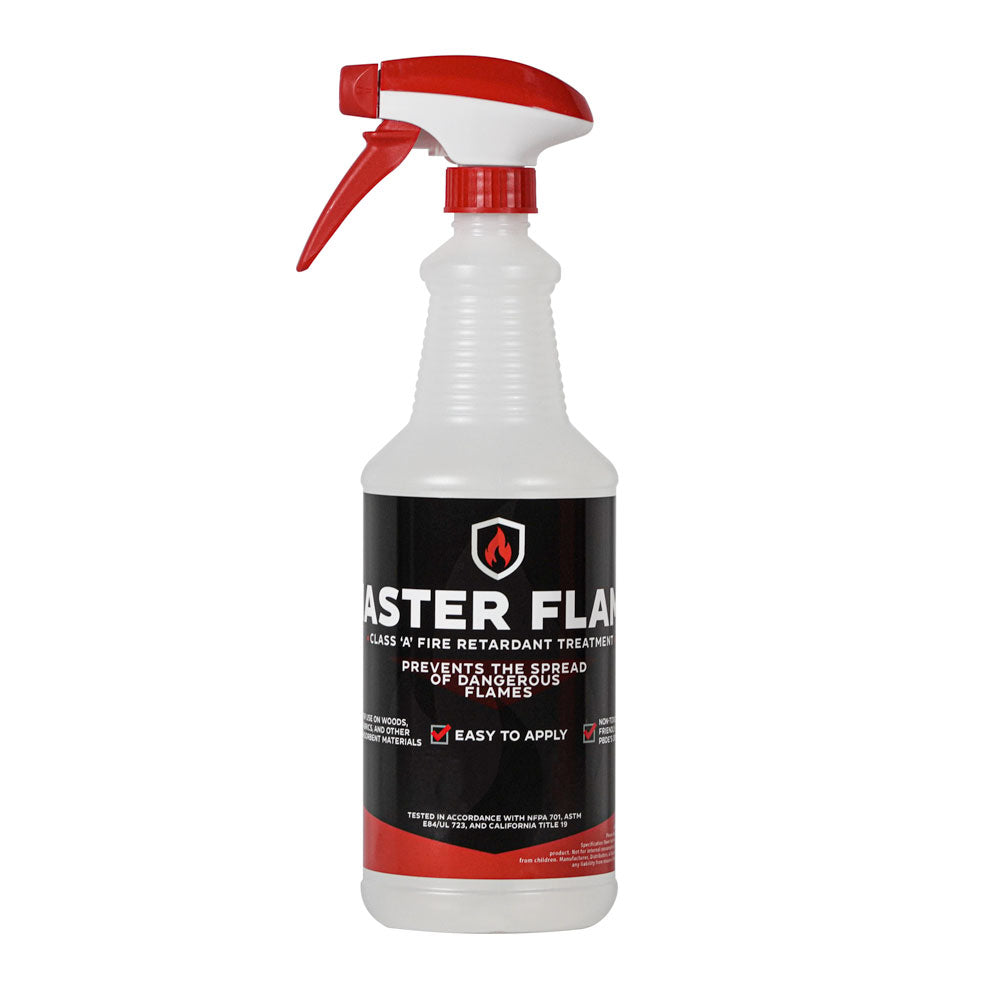
The honest answer is that applying Master Flame requires very little. A spray bottle and the product itself are all you need for most household applications. Spray evenly, let it dry for 24 to 48 hours, and the protection is in place. For smaller items like decorative pieces or cushion covers, you can soak them directly. There's no professional installation, no special equipment, and no complicated process. It's a straightforward step that most people can complete in an afternoon.
The Bottom Line
Fire safety at home doesn't have to be complicated, and it doesn't have to stop at smoke detectors. The curtains, the couch, the rug by the fireplace, the wooden pergola out back, the holiday wreath on the door are all part of the equation. Master Flame gives you a simple, proven way to make those materials dramatically safer, without changing the way your home looks or feels. Apply it once, and know that the things you care about most have a meaningful line of defense.