Master Flame Application Guide: Methods, Testing, and What to Expect

Applying Master Flame is straightforward, but getting the best results means understanding a few key steps before you start. This guide covers everything from compatibility testing to application methods, coverage estimates, what to expect during and after treatment, and when to reapply. Read through the whole thing before you begin, a few minutes of preparation makes a significant difference in the outcome.
Always Test for Compatibility First
Before treating any material at full scale, it's important to perform a small compatibility test. This is especially critical for materials outside of standard wood and fabric applications, but it's a good practice regardless of what you're treating.
To perform the test, apply Master Flame to a small sample of the material and allow it to dry fully for 24 hours. Once dry, hold the sample vertically and apply a small flame (a butane lighter or match is all you need) directly to the treated portion for 10 seconds, then remove the ignition source. If the flame extinguishes within 2 seconds of removing the lighter, the material is compatible and you're ready to proceed with a full application. If it doesn't, Master Flame is not able to adequately protect that material.
This step exists to protect you. Not every material behaves the same way, and treating a small sample first ensures you're not investing time and product into a surface that won't respond as expected.
Application Methods
Master Flame is designed to be accessible regardless of the scale of your project, and the application method can be adapted accordingly.
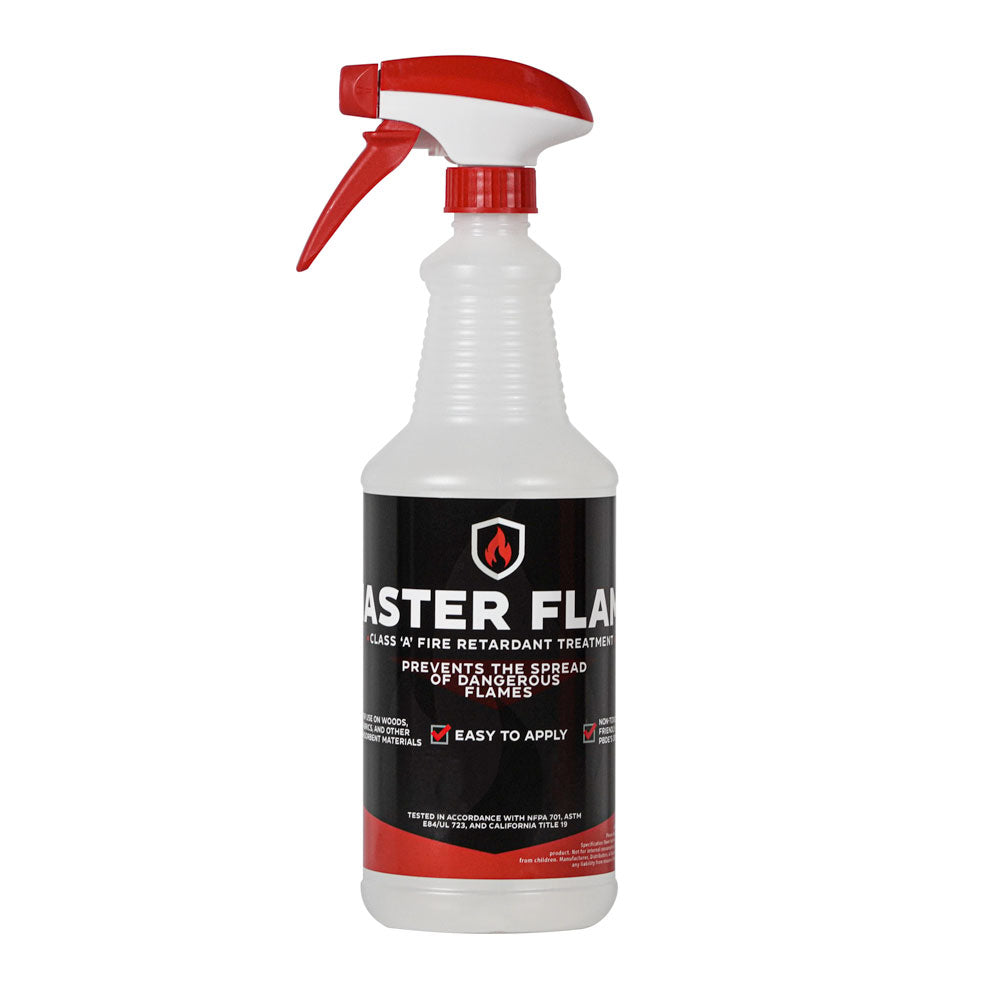
For most applications, a spray device is the most practical approach. Using a hand pump sprayer or any standard spray bottle, apply Master Flame evenly across the material. For thicker materials, treating all sides is important. Master Flame needs to absorb all the way through the material to provide full protection, and a single face application may not achieve that. For thinner materials, or situations where one side isn't accessible, the key is saturation. Think about the volume of the material and ensure it has absorbed enough Master Flame to be thoroughly treated all the way through. If the material feels fully saturated and has had adequate time to absorb, you're in good shape. For vertical surfaces where runoff is possible, multiple passes may be necessary to achieve that level of saturation.
For smaller items like individual pieces of fabric, decorative props, or smaller wood pieces, you can fill a container with Master Flame and soak the material directly. This method is one of the most effective ways to ensure complete saturation throughout the entire piece and is particularly well-suited for items with irregular shapes or highly porous surfaces like burlap or canvas.
For large-scale construction or production applications involving significant quantities of material, a commercial pump sprayer makes it practical to cover large surface areas efficiently. There's no special equipment required and no certified installer needed, the process is the same regardless of scale.
Drying Time and Multiple Coats
Each application of Master Flame requires a minimum of 24 to 48 hours of dry time before anything else is done to the material. This isn't just about surface dryness, it's about allowing the formula to fully penetrate and bind within the fibers or grain of the material. Rushing this step will compromise the effectiveness of the treatment.
The reason for the extended window is environment. In ideal conditions with good airflow and low humidity, 24 hours is generally sufficient. In spaces with high humidity, poor ventilation, or limited air circulation, the material will take longer to fully cure, and 48 hours is the safer standard. When in doubt, give it more time. A longer dry only helps, a shorter one can hurt.
If a second coat is needed or desired, the first coat must be fully dry before the second is applied. Each coat of Master Flame delivers up to 30 minutes of flame resistance, so additional coats provide additional protection. For high-risk environments or materials that will be in close proximity to flame sources, a second coat is a worthwhile investment.
What Proper Application Looks Like, And When to Expect Residue
In most cases, once Master Flame has dried you won't notice any visible change to the surface of the material, that's completely normal and means the formula has absorbed properly. In some cases, particularly where Master Flame has been applied heavily or to a highly porous material, you may notice small white crystals forming on the surface after it dries. This is not a defect and is not cause for concern. It simply means the material absorbed as much of the formula as it could hold, and the remainder dried on the surface. The protection is still fully present within the material, the residue is just excess that didn't absorb.
To remove it, gently wipe the surface with a dry towel. It's important to use a dry towel, not a wet one. A damp cloth can pull Master Flame back out of the treated material and reduce its effectiveness.
Painting and Sealing Over Master Flame
Master Flame is compatible with water-based latex paints and sealers. If you plan to finish the surface after treatment, Master Flame must always go on first. Allow a full 24 to 48 hours of cure time before applying any topcoat.
Its important to note that not all paints and sealers are created equal. When it comes to compatibility, it's always worth taking the time to test before committing to a full application. Even within water-based products, formulations can vary, and certain additives or ingredients could interact with Master Flame in unexpected ways. Before applying any paint or stain to your full project, test it on a small treated sample first and allow it to dry completely. Once dry, inspect the surface for any signs of incompatibility; discoloration, lifting, or unusual texture. If the sample looks and feels right, you're good to proceed. Oil-based products should always be avoided regardless, as they will negatively impact Master Flame's effectiveness and compromise the protection already built into the material.
For any material that will be exposed to outdoor elements, applying a water-based sealer after treatment is not optional, it's necessary. Master Flame is water-soluble, which means rain, snow, and prolonged moisture will gradually wash away its protective properties if the surface is left unsealed. A properly applied water-based topcoat locks the treatment in and preserves it over time.
How Much Master Flame Do You Need?
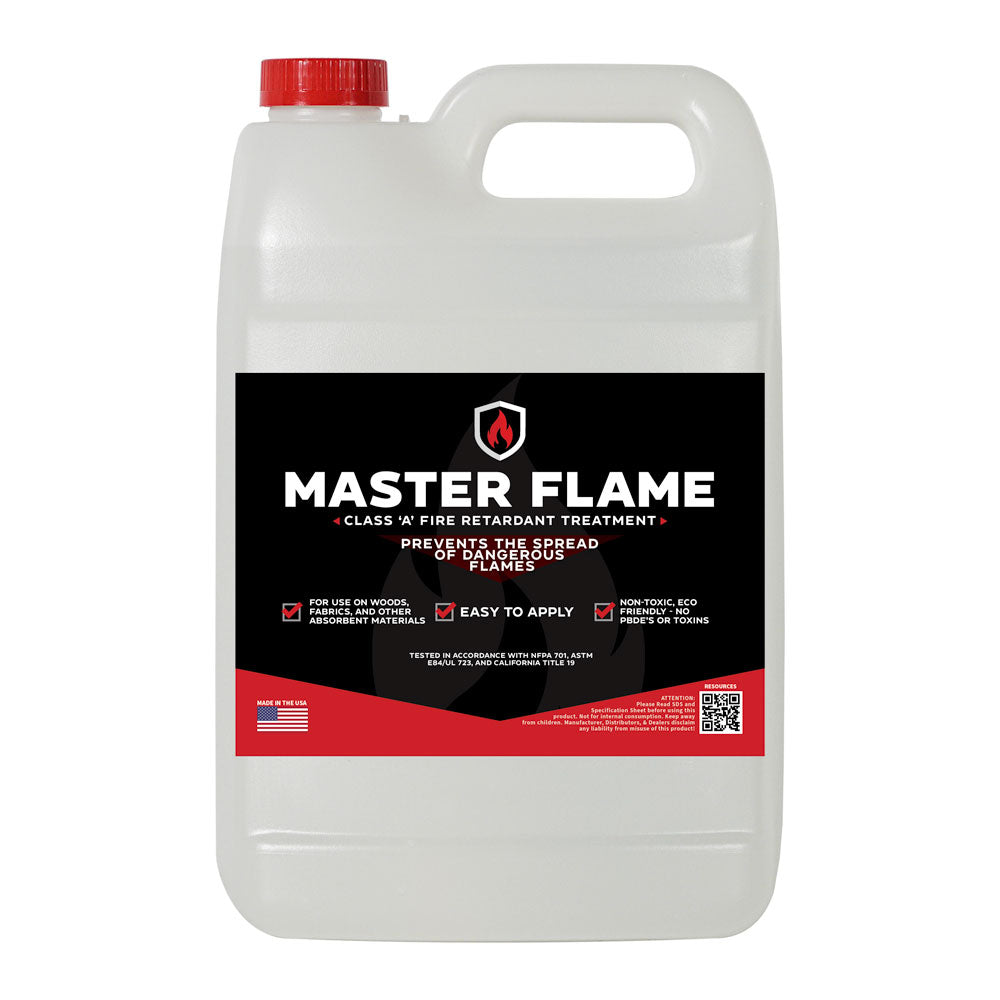
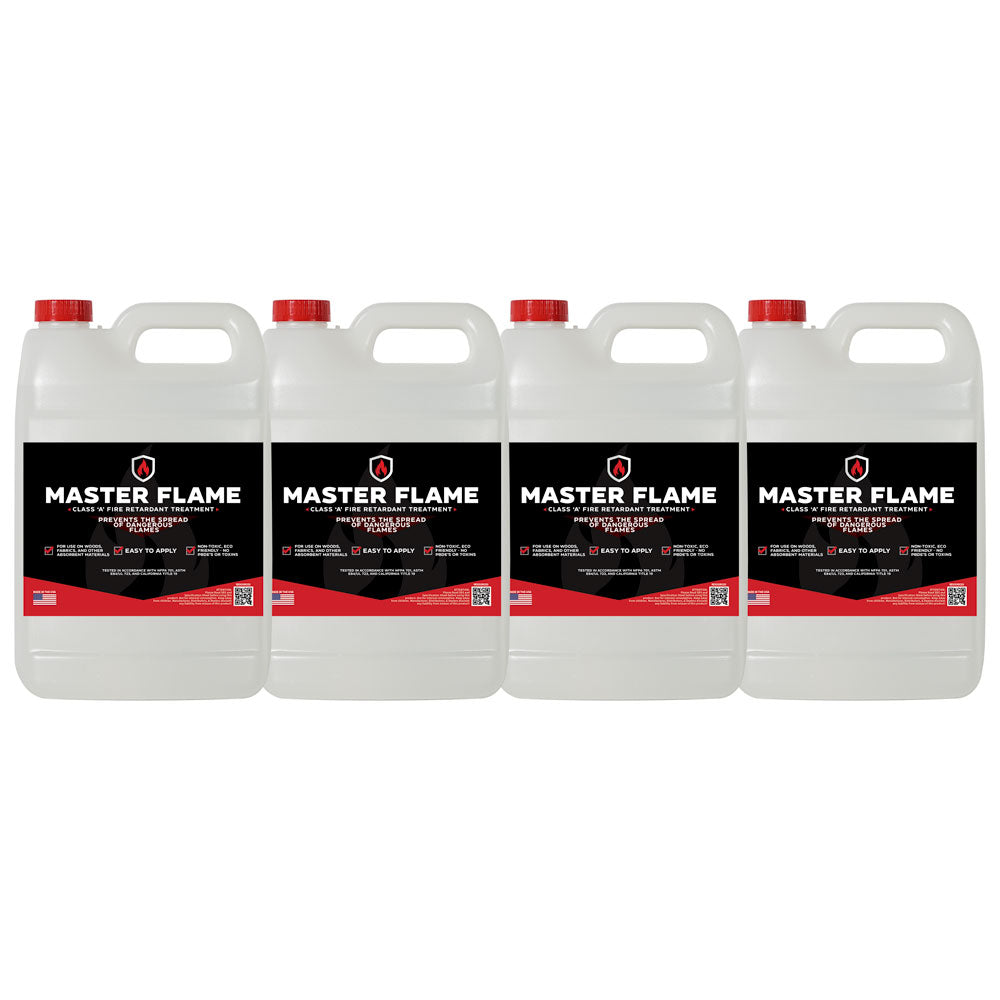
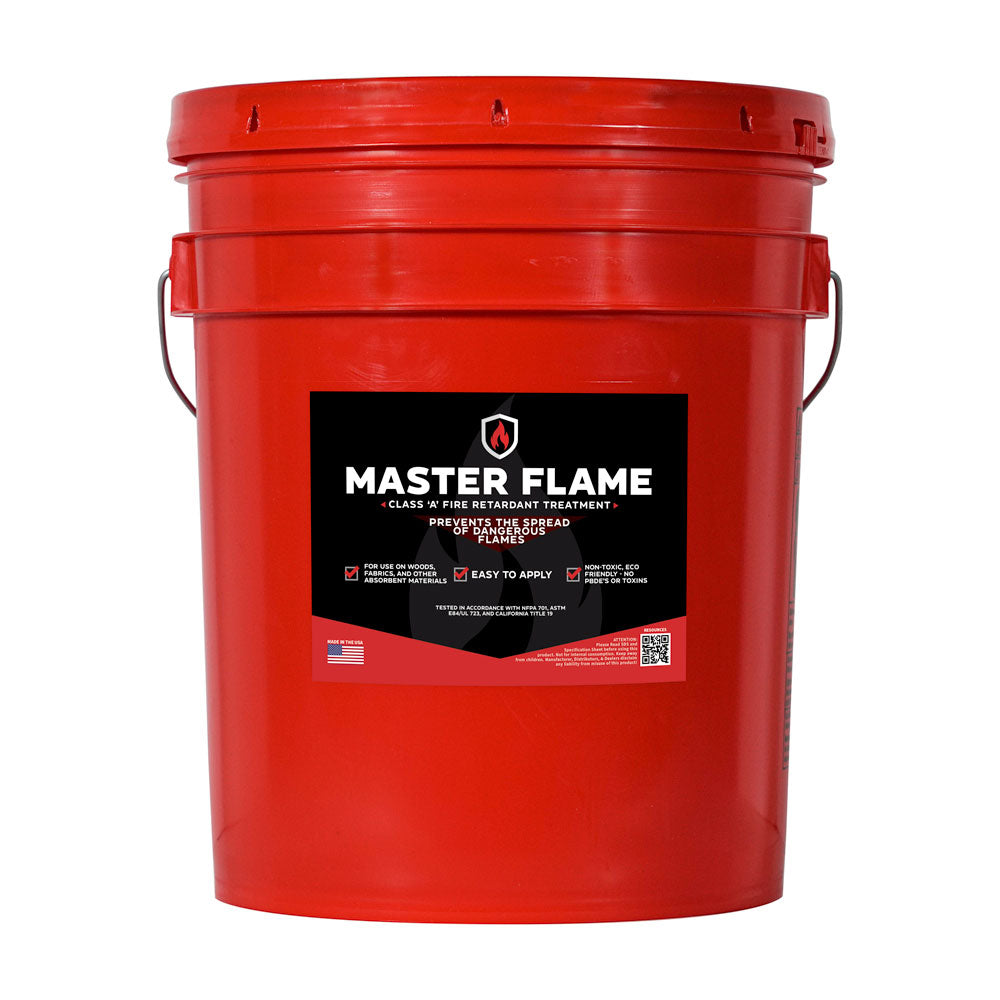
Coverage varies depending on the thickness and density of the material being treated, but the approximate coverage guidelines by product size are as follows. A quart sprayer covers up to 100 square feet. A single gallon covers up to 500 square feet. A 4-gallon case covers up to 2,000 square feet. A 5-gallon pail covers up to 2,500 square feet. And a 55-gallon drum covers up to 27,500 square feet, making it practical for large commercial and construction projects. For best results, always account for treating all sides of the material when calculating how much you need.
When to Reapply
For indoor wood not exposed to moisture, reapplication is recommended every 2 years. Even in a stable indoor environment, wood naturally expands and contracts with seasonal shifts in temperature and humidity, and that movement gradually works the formula out of the grain over time. Normal air circulation, surface wear, and dust accumulation also contribute to the slow degradation of the treatment. It's a gradual process, but maintaining a regular reapplication schedule ensures your protection never lapses.
For unfinished wood exposed to outdoor elements — precipitation, humidity, and temperature fluctuations — reapplication should happen more frequently, as moisture will degrade the treatment at a much faster rate. Applying a water-based sealer after treatment dramatically extends the interval between reapplications for outdoor wood.
For fabrics that experience high friction like uniforms, upholstery, frequently handled soft goods; reapplication every 6 months is recommended. For fabrics that are washed, Master Flame must be reapplied after laundering, as the water-soluble formula will be removed in the wash. For dry-cleaned items, reapplication is recommended after every other dry cleaning cycle.
Material-Specific Reminders
For wood, the surface must be unfinished and free of debris before treatment. Master Flame will not penetrate painted or sealed wood. If the surface has an existing finish, sand it down to bare wood before applying.
For fabrics, the material must be free of debris and must not have any waterproof or impermeable characteristics. Items made from or containing synthetic materials like polyester, nylon, acrylic, or spandex are not compatible with Master Flame, as these fibers cannot absorb the formula.
For any other absorbent material not covered above, always perform the small-scale compatibility test described at the beginning of this guide before committing to a full application.
For questions, please contact our team of experts at info@masterflameretardant.com