Halloween Fire Safety: Is Your Décor Protected?

Halloween decorating leans heavily on natural materials. Hay bales, corn stalks, burlap, cotton cobwebs, cheesecloth, dried florals, raw wood, and just about anything else that soaks up water rather than repelling it. It's what gives a display that authentic, lived-in look, and it's the reason the good setups feel genuinely atmospheric instead of store-bought.
That absorbency is the part most people never think twice about. You buy the materials, you build the display, you put it up. Flame retardant rarely enters the conversation, even though absorbent natural fiber is exactly what the product was made for.
That's worth knowing, because the Master Flame treatment takes one afternoon and gives you a layer of confidence that lasts the entire season. It works the same way whether you're putting up a few decorations at home or building out a full attraction.

What Master Flame Does
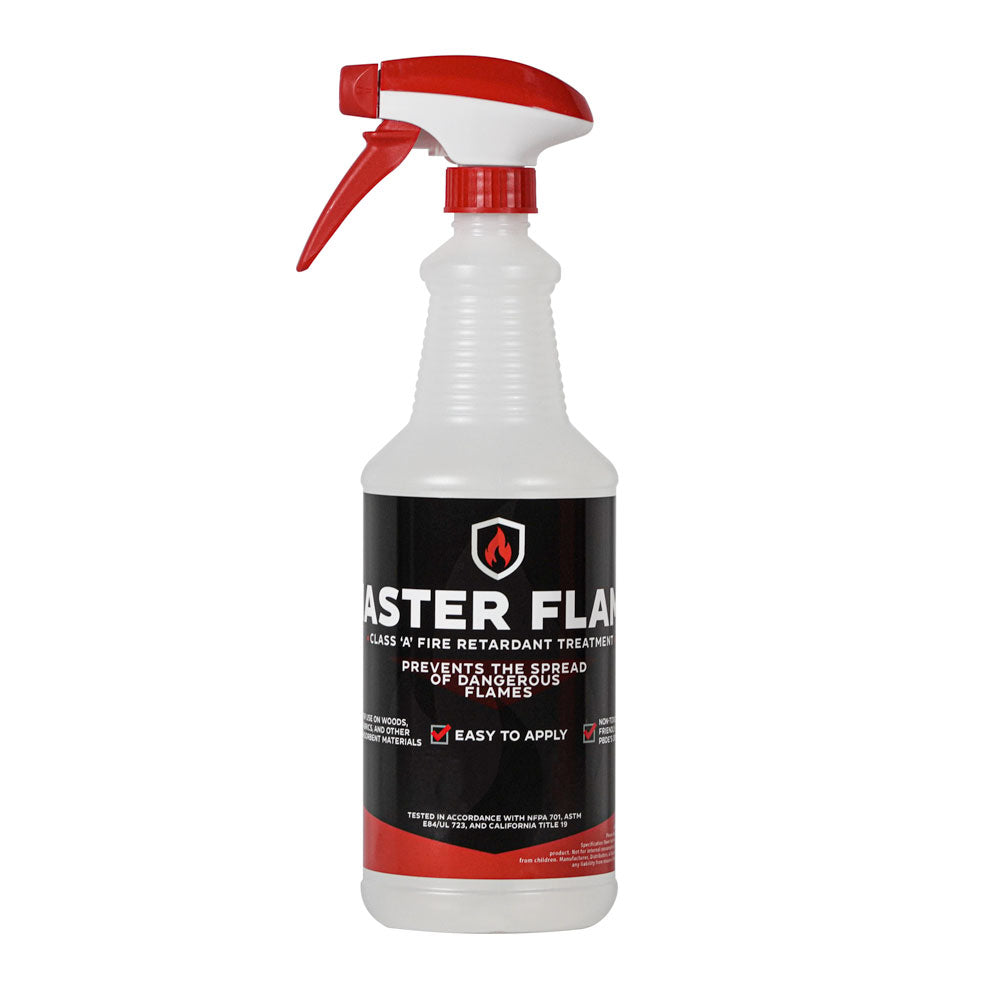
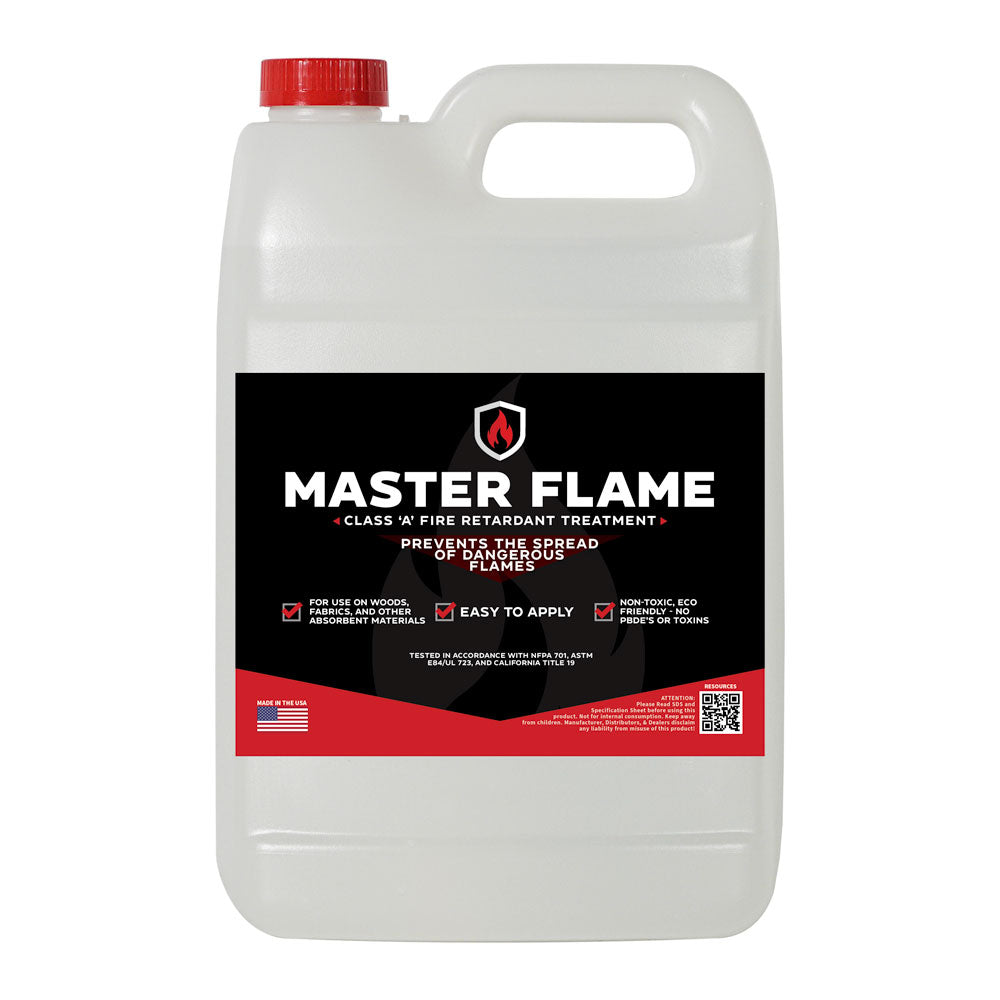
Master Flame is a Class A flame retardant for wood, fabric, and other absorbent materials. It isn't a surface coating. It penetrates the material's cellular structure and binds inside the fibers, forming a protective barrier from the inside out.
When treated material meets flame, that barrier resists ignition and slows the spread, which buys time to react. It's water based, non toxic, and free of PBDEs, so it's safe to use around the house. It also dries clear, meaning nothing about your display changes visually.
It's been independently tested to NFPA 701, ASTM E84, UL 723, and California Title 19, and it carries a Class A rating, the highest classification available.

Start Here: Does It Absorb Water?
That's the compatibility test in one question. If a material readily takes on water, Master Flame can bond with it.
Works on: hay, straw, corn stalks, burlap, cotton (including spider webbing), cheesecloth, muslin, canvas, linen, unfinished wood, cardboard, paper mache, and natural fiber rope or ribbon.
Won't work on: polyester, nylon, silk, vinyl, foam gravestones, plastic props, and anything already painted or sealed. If water beads up and rolls off, there's nowhere for the formula to go.
When you're unsure, run a scrap test. Spray a small piece, let it dry 24 hours, hold it vertically, and apply a lighter for 10 seconds. If the flame goes out within two seconds, treat the rest. Do this outside, over concrete or gravel, with water within reach.
How Easy Is Flame Retardant to Apply?
Easier than most people expect. No license, no contractor, no special equipment.
Fill a standard pump sprayer, spray evenly on all sides, and let it dry. That's the job. Every face matters, since an untreated back side gives flame an open path, but beyond that it's the same motion as watering a garden. Small items like webbing, ribbon, and cloth props can be dipped in a container instead, which is the fastest way to get even saturation.
How much you'll need depends on how thick and porous the material is. Hay and raw lumber require noticeably more than smooth fabric, so plan for a little extra there.
The only other thing to plan around is drying time. Each coat needs 24 hours, so give yourself a few days of runway before the display goes up rather than doing it the night before.
That small time investment pays off most in the conditions where it matters. Dry climates, windy stretches, late-season heat, and high fire risk regions all raise the odds that something in a display gets tested. An afternoon of prep in September covers you through the end of October.

Going Outside? Add a Clear Coat
This is the step people miss.
Master Flame is water soluble, which is exactly why it penetrates so well and also why weather will gradually draw it back out. A display treated early and rained on a few times won't be carrying the same protection by the end of the month.
The fix is straightforward. Apply Master Flame first, let it cure 24 to 48 hours, then seal it with a water based clear coat to lock it in. Water based only, since oil based sealers and paints work against the treatment. Indoor décor doesn't need a sealer.
If a material can't take a sealer, simply reapply as conditions call for it. After a heavy rain or a stretch of humidity, another quick pass puts the protection back where you want it.

For Haunted Attractions and Seasonal Events
If you're running a haunted house, corn maze, escape attraction, or fall festival, treating your materials isn't a preference. It's part of the code.
Decorative materials in public assembly spaces are subject to flame resistance requirements, most commonly NFPA 701. Fire marshals inspect for it, and the materials that make a haunt work are almost entirely the ones that fall under it: burlap and muslin wall coverings, corridor drapes and scrims, cotton webbing, straw and hay scene dressing, unfinished lumber and plywood flats, cardboard and paper mache props.
Master Flame is a practical answer to that requirement. It's tested and certified to NFPA 701, ASTM E84, UL 723, and California Title 19, it applies with the same pump sprayer you'd use anywhere else, and it's available in quantities that scale from a single room to a full build.
Two things make inspection day easier. First, treat during build week rather than opening week, since every coat needs a 24 hour dry. Second, keep your spec sheet and test documentation on site. Being able to hand an inspector the paperwork is usually the difference between a quick walkthrough and a long one.
For an operator, the cost of treating a build is small measured against a delayed opening or a failed inspection during your only revenue window of the year.

Ready to get this year's display ready? Shop Master Flame or browse the spec sheet and test documentation to see the full details.